
Medical coding,
made smarter.
AI-assisted coding. Evidence-based abstracting. CIHI-aligned data quality. Trusted analytics.
From the first clinical document to DAD-ready abstracts and hospital intelligence, Venuiti helps coding teams work with more clarity and confidence.
Canadian coding standards · Coder-reviewed AI · Hospital-focused analytics
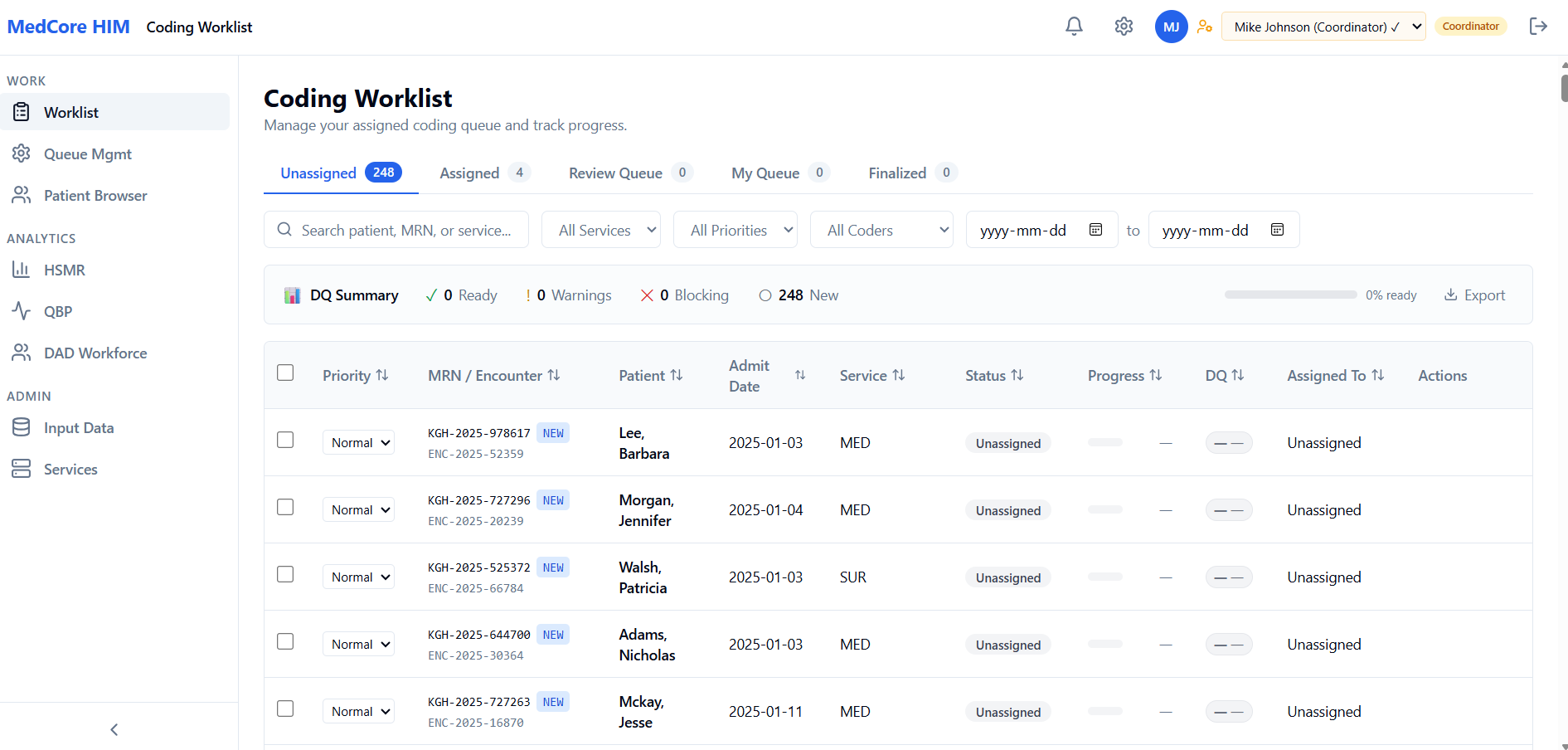 Enlarge ⤢
Better coding isn't the finish line. Better data is.
Patient information lives across clinical notes, diagnoses, procedures, and discharge documents. MedCore HIM brings the coding journey into one connected view, making quality and insight part of the workflow.
Give coders the clinical context
AI-assisted field population, suggested diagnosis codes and linked source evidence help coders focus on judgment rather than searching.
Make review and QA visible
Worklists, exception flags, coding progress and a source evidence trail help teams keep decisions transparent and reviewable.
Turn trusted data into insight
Explore how the same structured information supports quality reporting, case-mix analysis, resource intelligence and workforce management.
One workflow. From coding to confidence.
These are actual screenshots from Venuiti's demonstration environment, not generic product illustrations. Select any capability to see it in more detail.
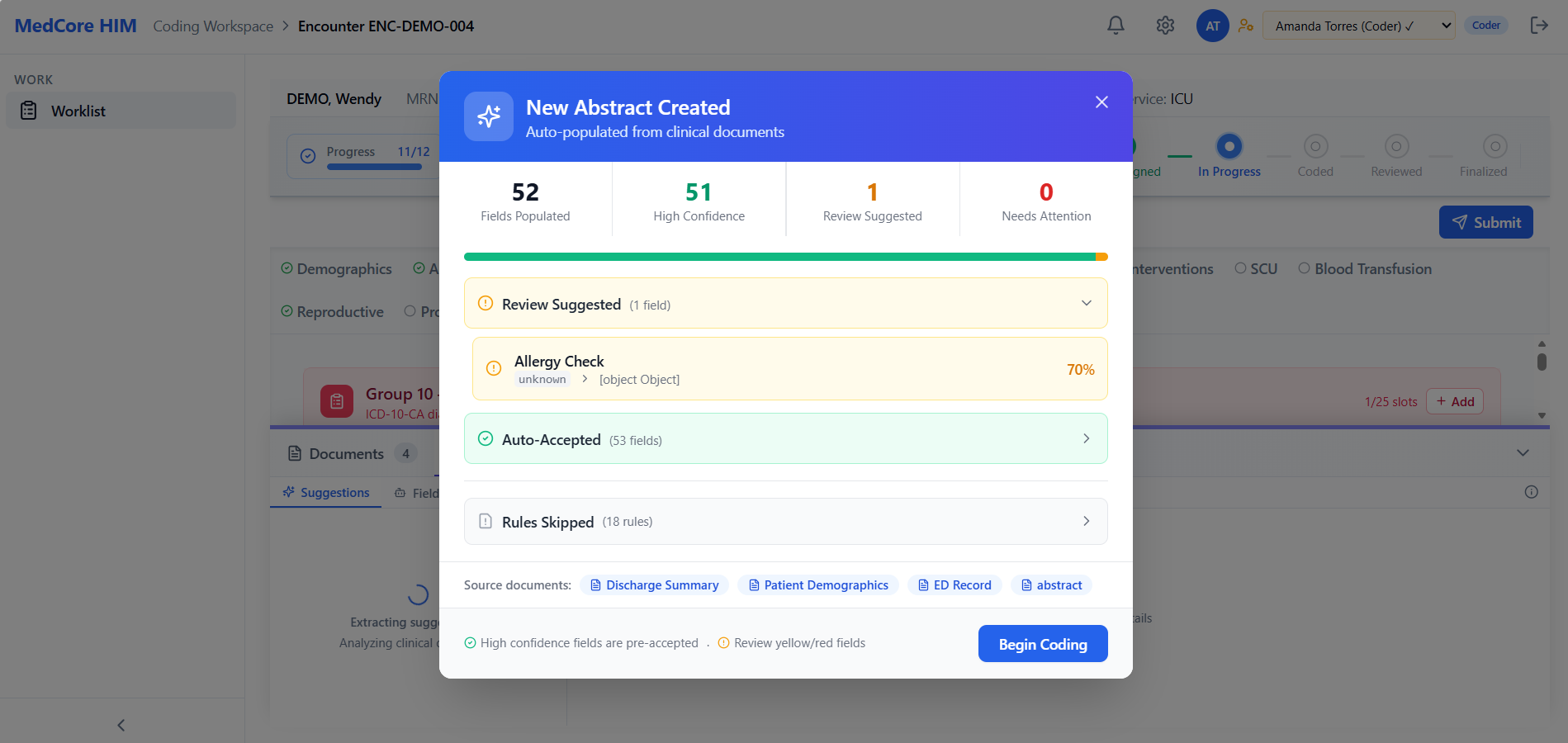
AI-assisted abstract creation
Surface structured information from source documents. Review flags help coding teams focus on what needs attention.
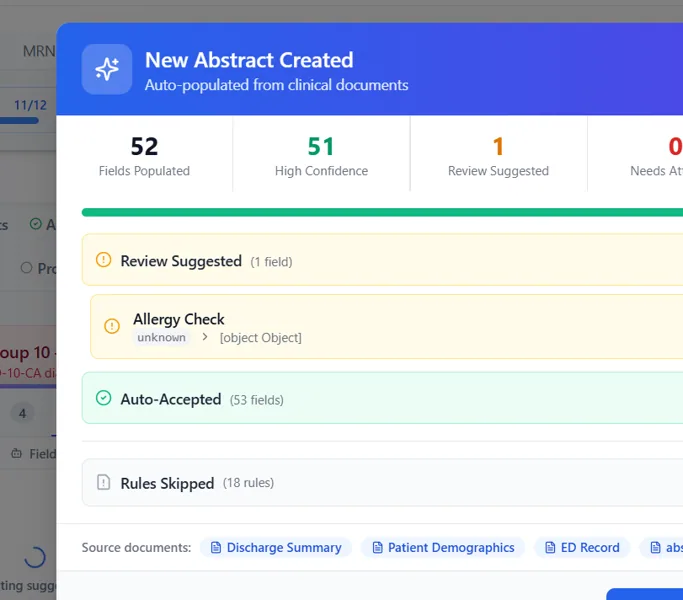 Explore screenshot
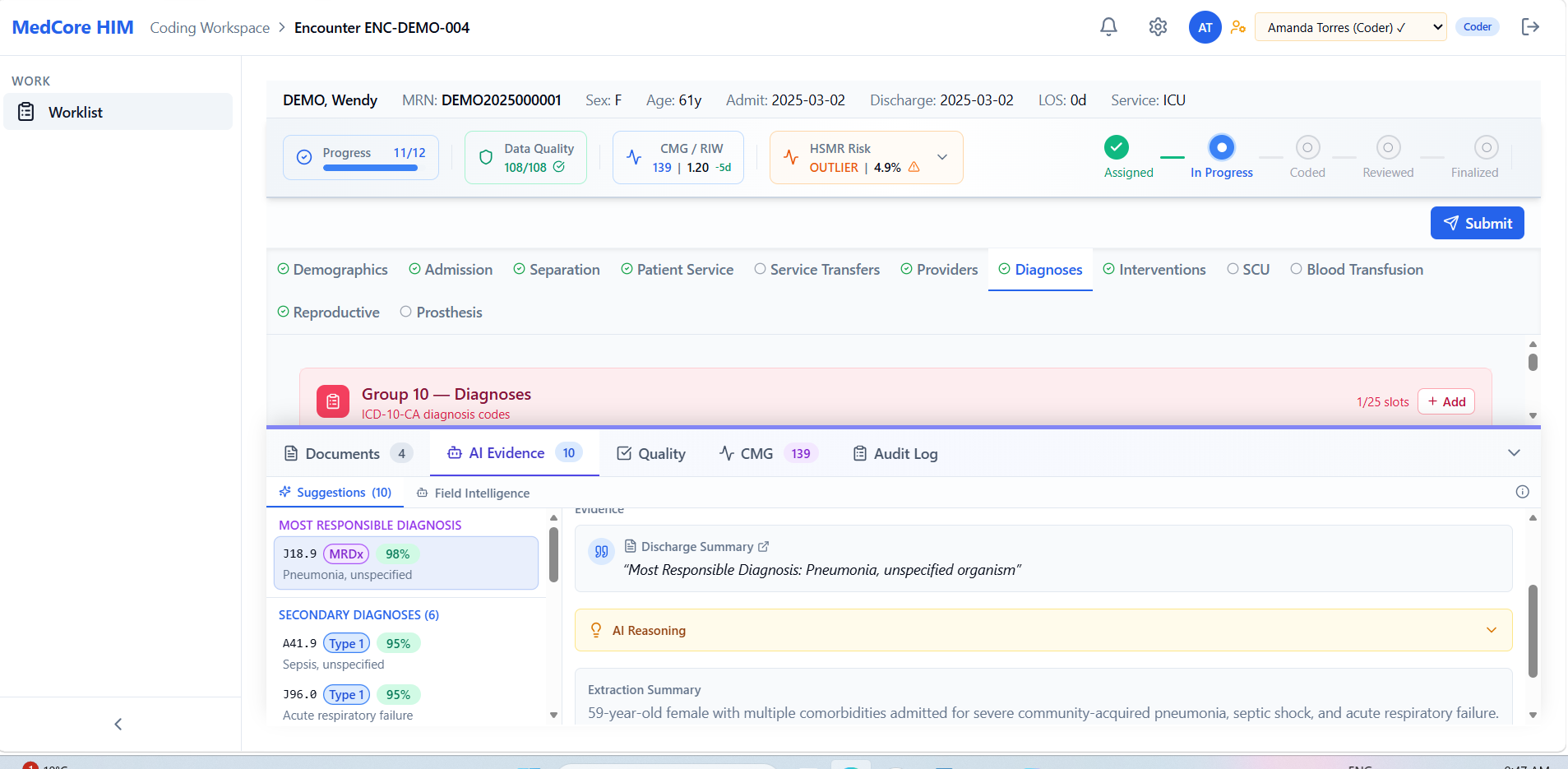
Explainable AI suggestions
Connect suggested diagnoses with the clinical notes supporting them, so professionals can evaluate the evidence.
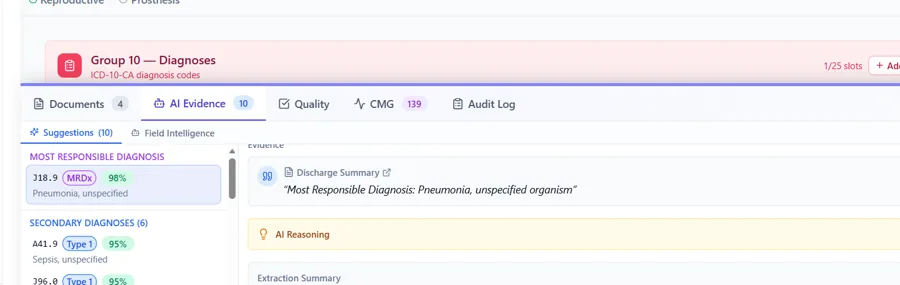 Explore screenshot
Coder-controlled workflows
Review Canadian diagnosis coding, adjust abstract fields and move cases through a structured QA process.
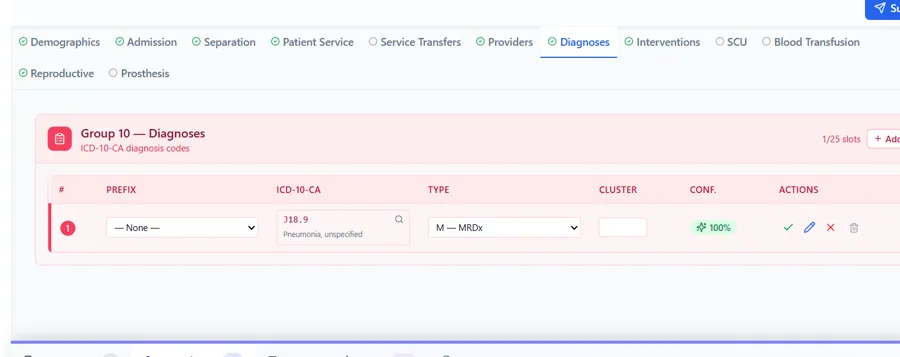 Explore screenshot
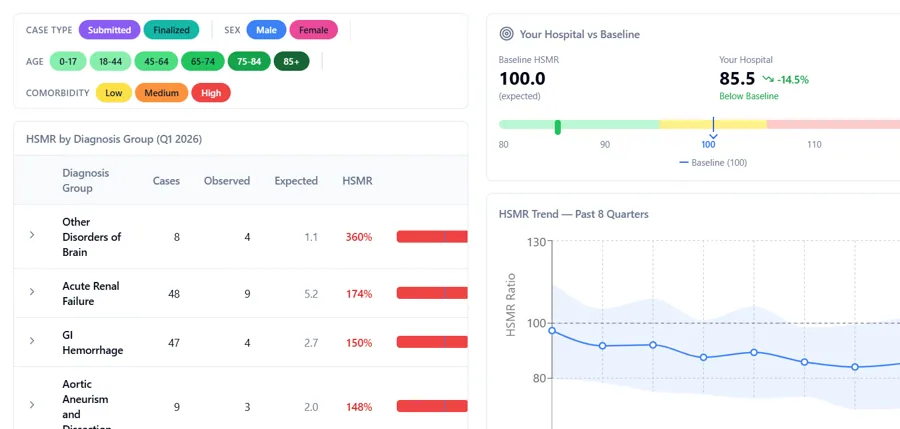
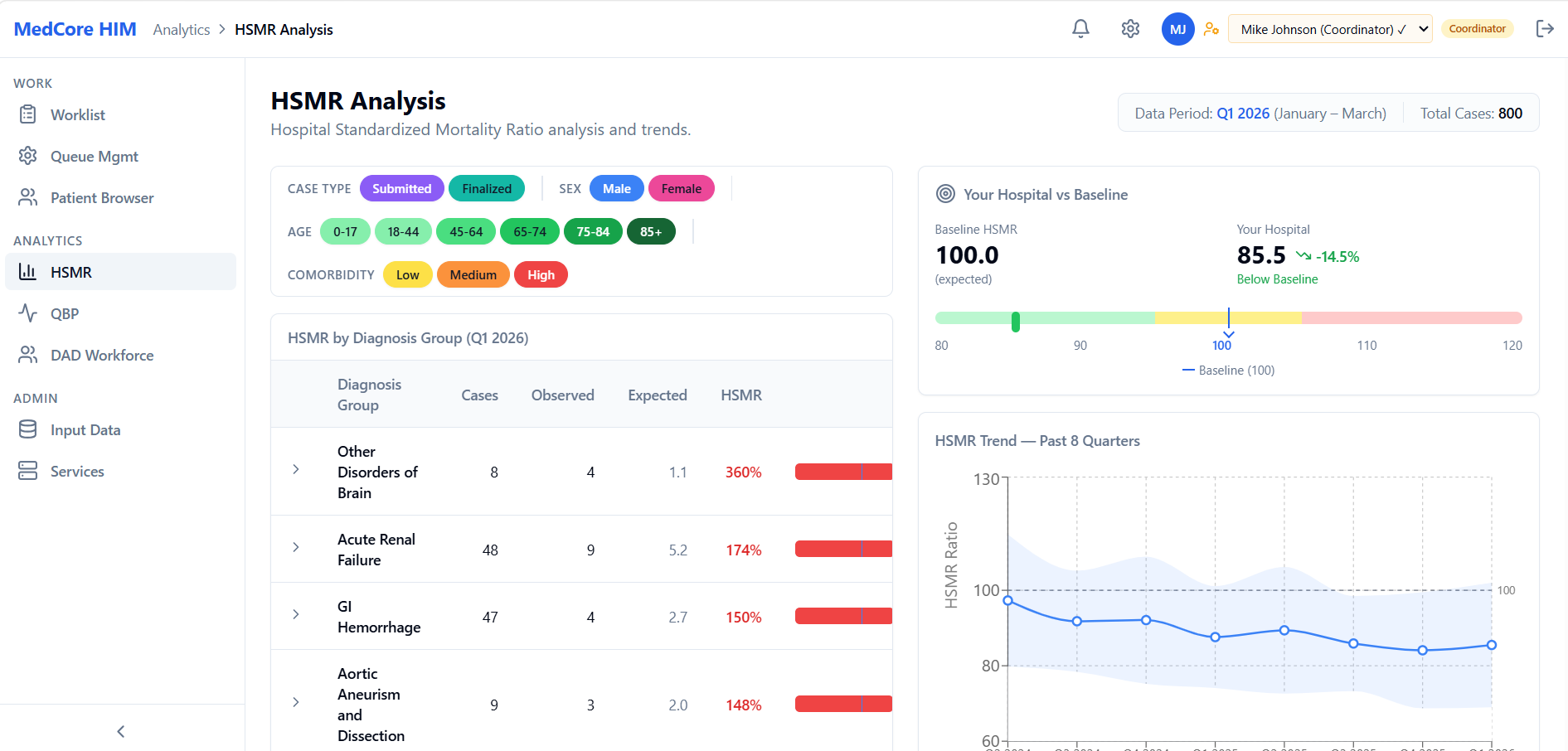
Hospital quality intelligence
Explore HSMR patterns, mortality groups and potential documentation opportunities using the same underlying information.
 Explore screenshot
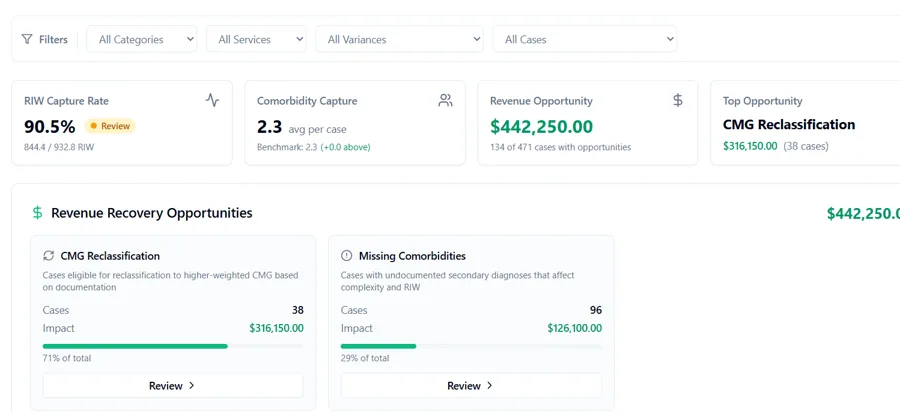
Funding & resource visibility
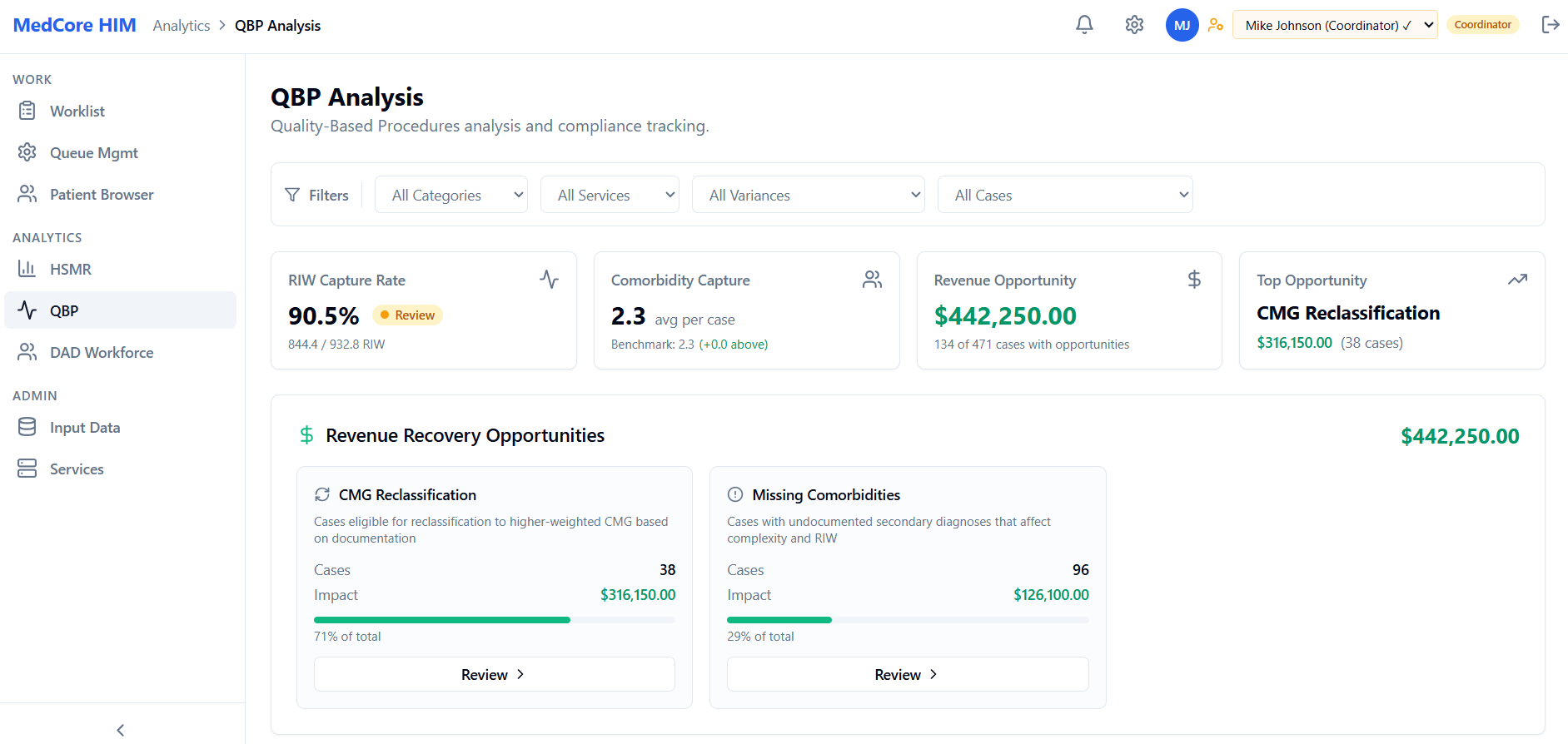
Explore QBP pathways, case mix, comorbidities and potential areas requiring coding or documentation review.
 Explore screenshot
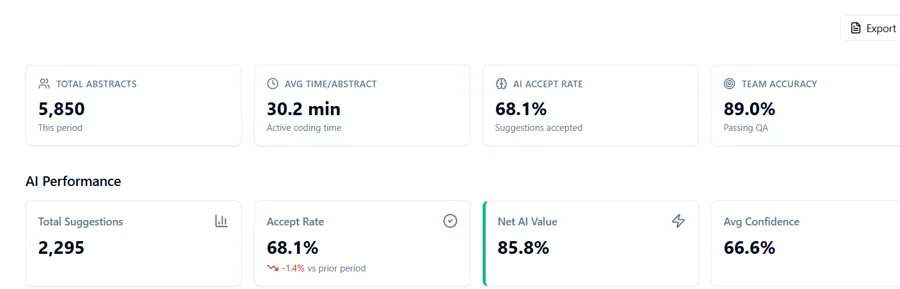
Workforce & AI performance
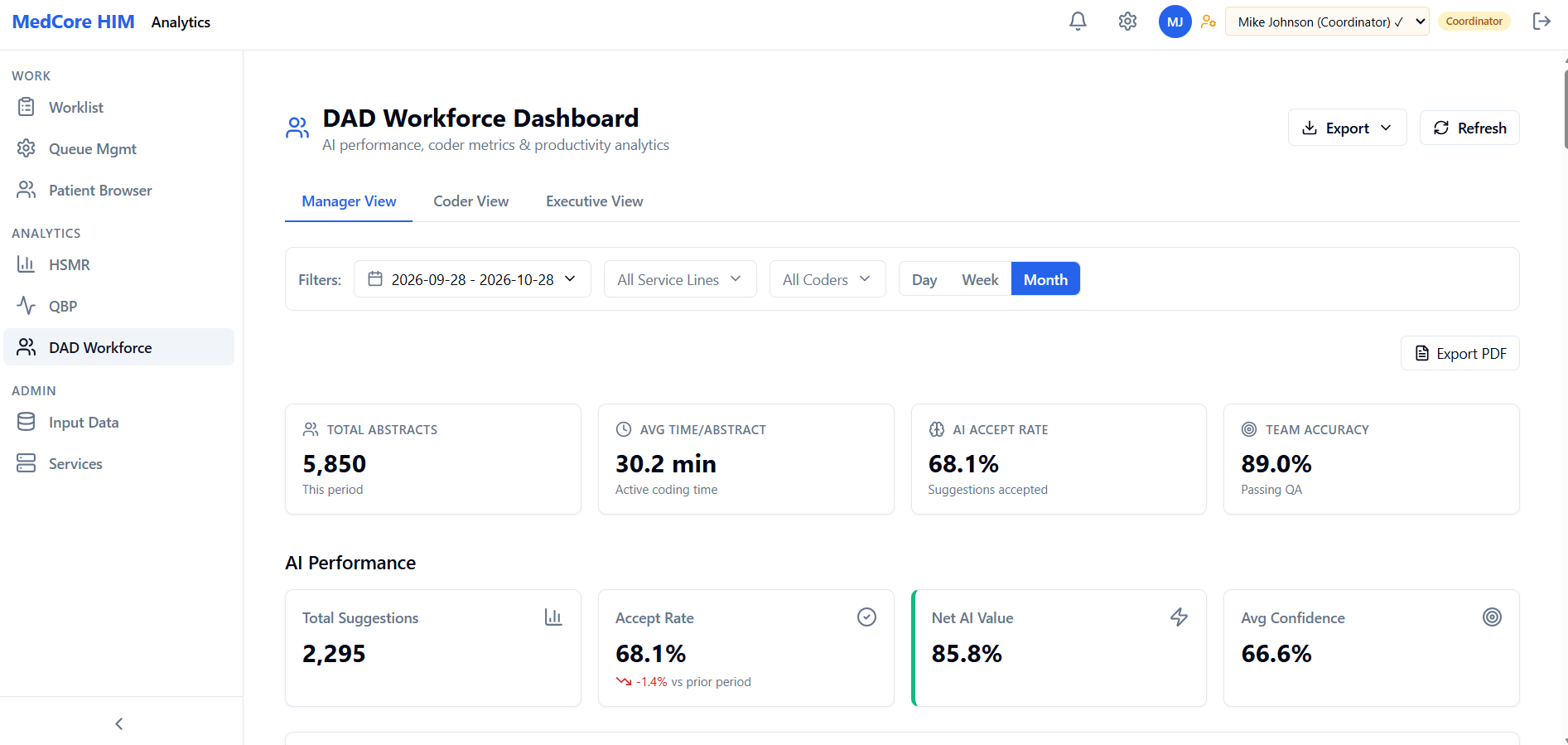
See coding volumes, time per abstract, suggestion acceptance and quality indicators in a single operational view.
 Explore screenshot
See the platform in action.
Nine product views covering worklists, AI-assisted abstraction, evidence and hospital analytics.
Browse the screenshots below. Click the image to enlarge it; all sample patients and performance metrics are illustrative demo data.
Coding Worklist
Coordinate cases, assignments and readiness in one view.
Enlarge ⤢AI-created abstract
See how clinical documents populate fields and direct exceptions to review.
 Enlarge ⤢
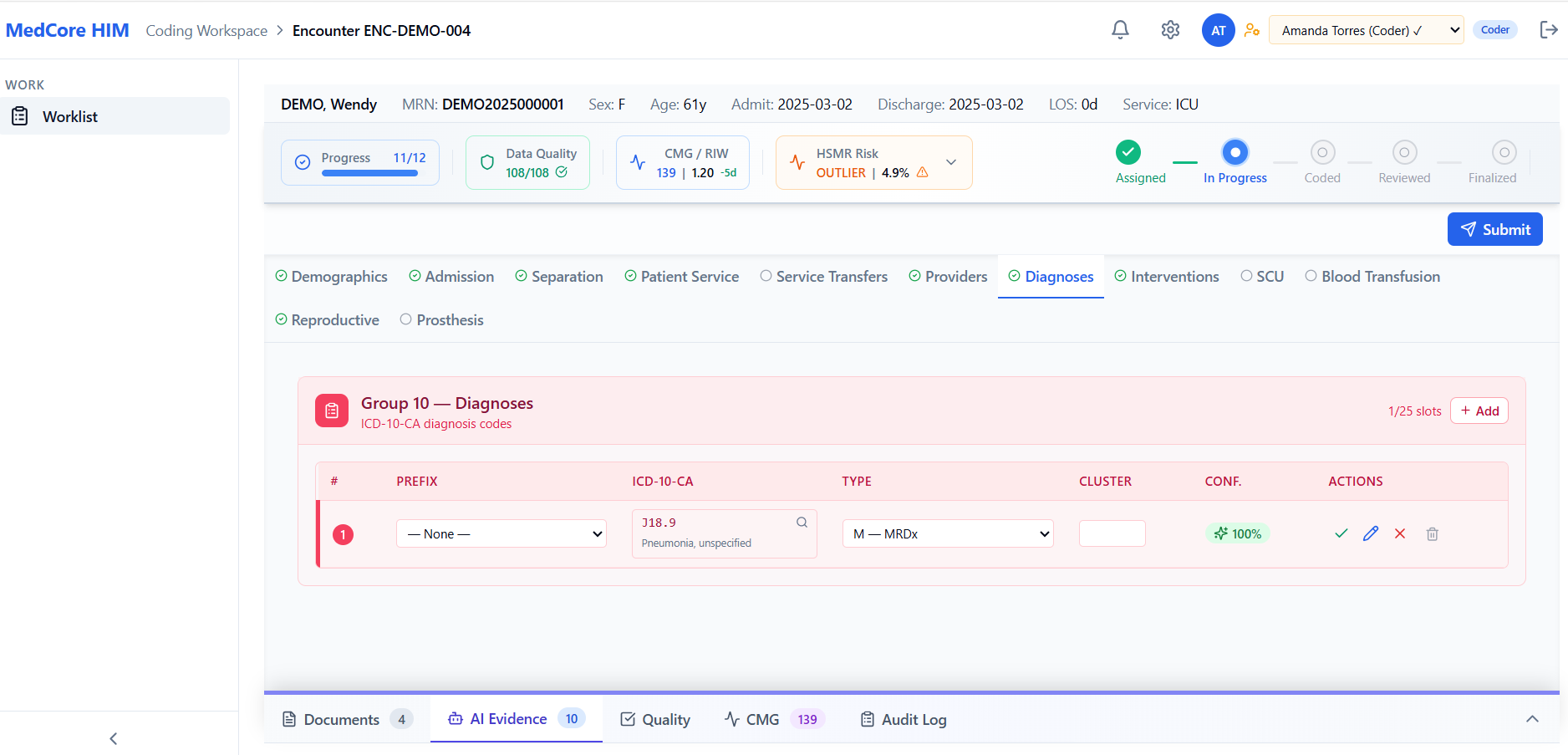
Coding workspace
Review ICD-10-CA diagnoses, case progress and clinical context.
 Enlarge ⤢
AI evidence
Connect coding suggestions to their source documentation and reasoning.
 Enlarge ⤢
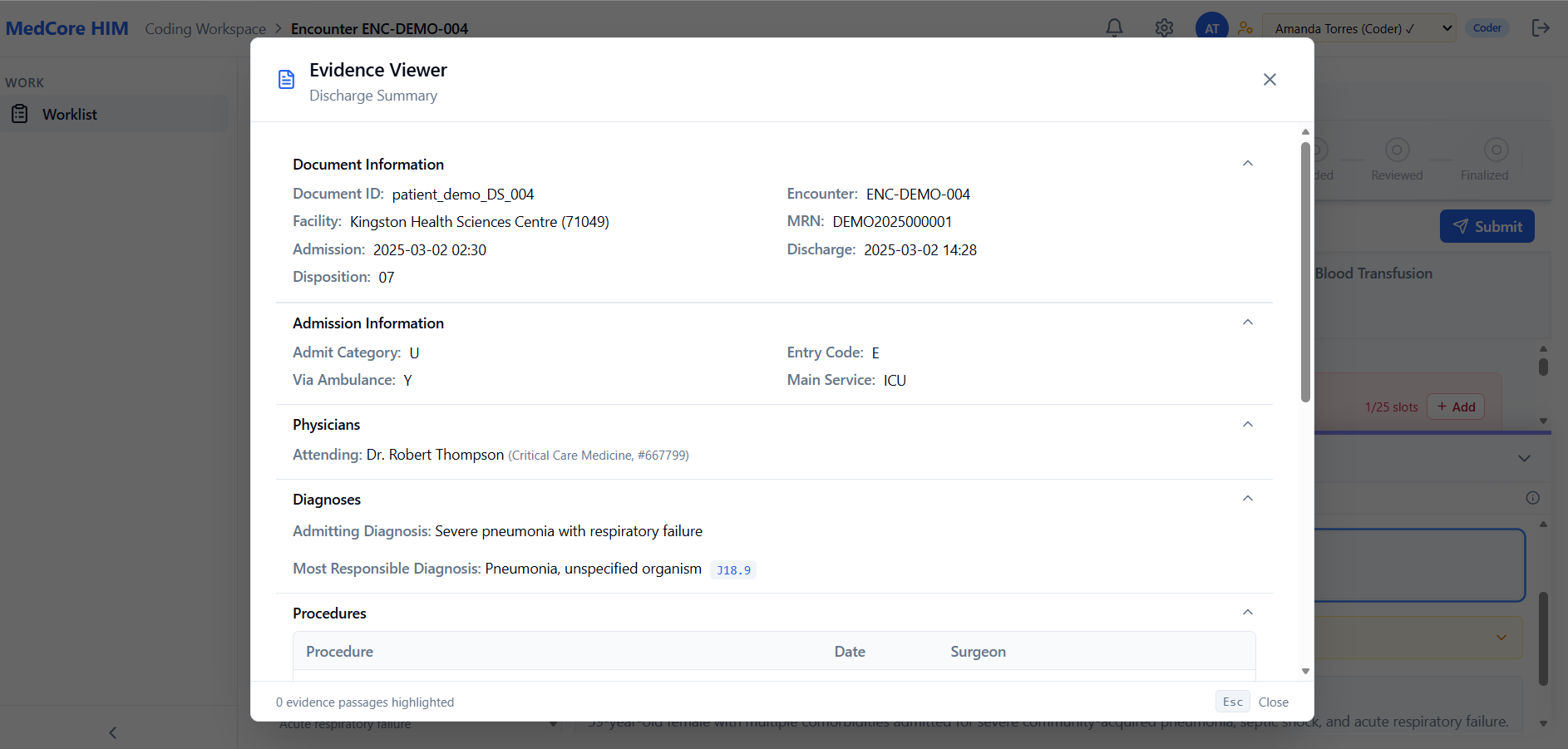
Source evidence
Inspect the original clinical document and preserve a clear evidence trail.
 Enlarge ⤢
HSMR analysis
Explore mortality trends, diagnosis groups and case-mix signals.
 Enlarge ⤢
QBP opportunities
Surface case-mix and funding-related review opportunities.
 Enlarge ⤢
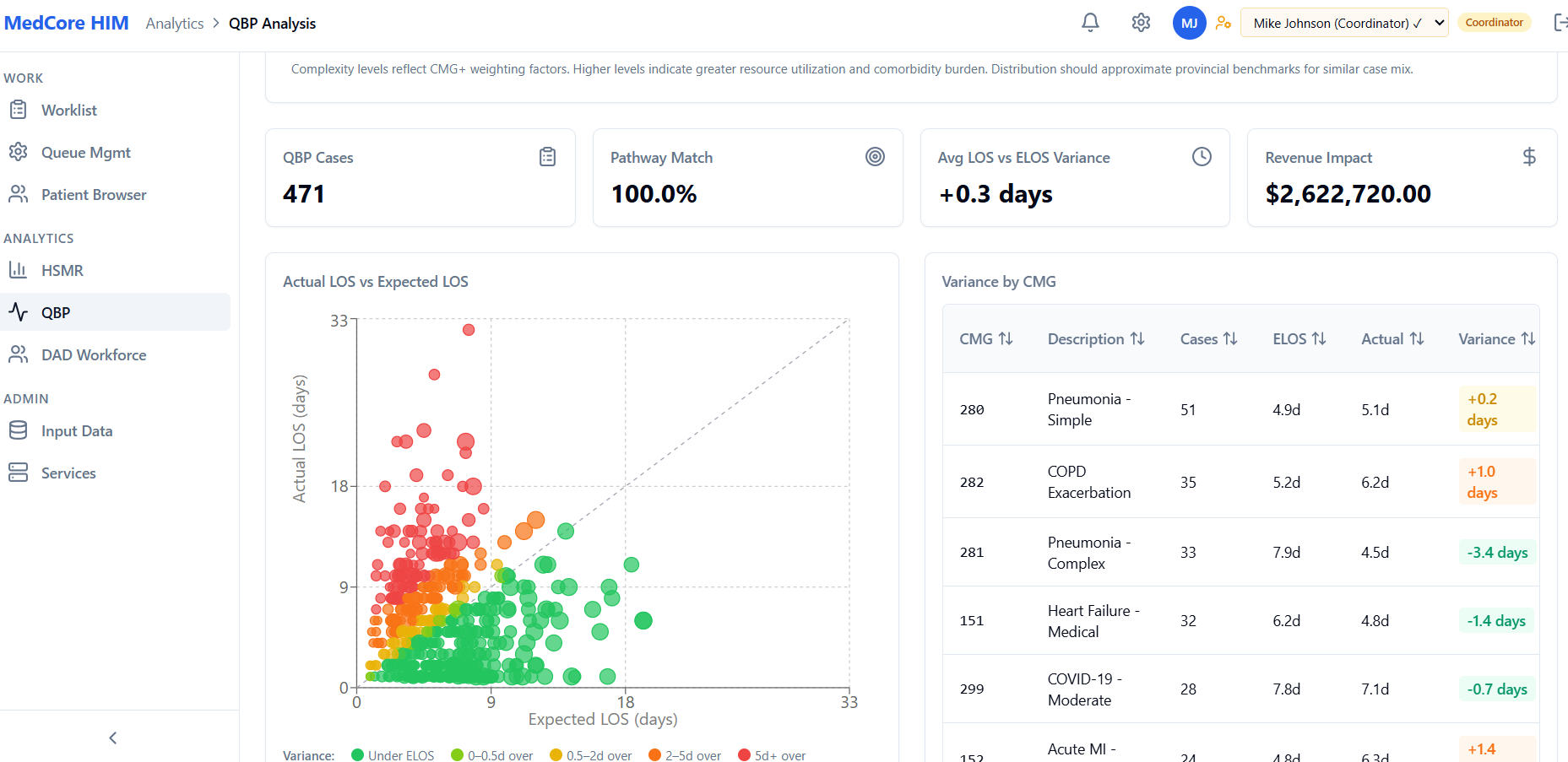
QBP variance
Compare actual versus expected length of stay across clinical groups.
 Enlarge ⤢
DAD workforce
Track abstract volumes, productivity and the use of AI suggestions.
 Enlarge ⤢
One trusted dataset. More meaningful decisions.
Validated abstracts are useful well beyond a submission. Explore mortality and resource trends, QBP pathways, and operational performance, all while keeping context behind the numbers.
HSMR: the quality lens
Understand diagnosis-group patterns, explore trends and identify records that may warrant closer clinical and documentation review.
QBP: the performance lens
Explore case-mix complexity, pathway alignment, potential funding-related opportunities and length-of-stay variance.
From clinical documentation to trusted insight.
A coordinated coding and review process, designed around the expertise of Canada's health information professionals.
Capture
Bring encounters, clinical documentation and source data into the coding workflow.
Code
Populate abstracts and review suggested ICD-10-CA and CCI coding with supporting evidence.
Validate
Address quality exceptions, apply coder judgment and preserve decisions for audit review.
Analyze
Use structured data across DAD workflows, HSMR, QBP and workforce analytics.
Canadian health information needs a Canadian approach.
Our experience in interoperability, conformance testing and healthcare integration informs how we build around local coding standards and real hospital processes.
Built for Canadian coding
Designed around ICD-10-CA, CCI and CIHI-aligned workflows rather than retrofitted US codes.
Coder-first by design
Human-led review remains central to coding, abstract approval and quality oversight.
Integration experience
Experience with Canadian health data standards, clinical systems and modern APIs.
Connected analytics
Bridge the coding workflow with hospital quality, funding and workforce insight.
Answers for Canadian hospital teams.
Does MedCore HIM replace professional medical coders?
No. AI suggestions support the coding process, while trained professionals retain review and approval responsibilities.
Which coding and reporting standards does the solution address?
The demonstrated workflows are designed around Canadian ICD-10-CA and CCI coding, CIHI-aligned validation and DAD-related abstraction. Specific module coverage and deployment scope are confirmed with each hospital.
Can Venuiti connect with our hospital information systems?
Venuiti has extensive experience integrating healthcare systems using HL7, FHIR, APIs and clinical-document interfaces. Specific integrations depend on source data access and the hospital environment.
Are the dashboard results shown here actual customer results?
No. These screenshots are from a demonstration using synthetic cases and illustrative analytics. They illustrate available screens, not independently verified live hospital outcomes or a guarantee of financial improvement.
Give coding professionals better tools. Give hospitals better data.
Book a product walkthrough to explore coding and abstracting, evidence-led review, CIHI-oriented validation, and the analytics that follow.